Historic Parrish

Parrish: Our History

Parrish has a rich heritage rooted in agriculture, railroad expansion, and strong community traditions. The community takes its name from the founding Parrish family, who established farms and cattle operations in the mid-1800s. Like many families of the time, the Parrish family helped shape the area through hard work, stewardship of the land, and a deep commitment to community life.

As the region developed, Parrish became a railroad stop, which brought new opportunities for trade and connection. Local farms and ranches benefited from the ability to ship citrus, vegetables, and cattle throughout the state. The railroad depot became a center of daily activity where neighbors gathered, goods were exchanged, and the community grew in both size and spirit.

For many decades, Parrish remained a quiet, close-knit rural community defined by open fields, family farms, and long-standing relationships. The pace of life was slower, and the values of neighborliness, resilience, and tradition were deeply woven into the fabric of everyday life.

Honoring Our Roots

Today, reminders of Parrish’s past continue to enrich its identity. The Florida Railroad Museum, located in Parrish, preserves this important history through restored railcars, historical exhibits, and interactive train experiences that celebrate the story of how the community began.

Parrish’s history remains a meaningful part of its character, connecting us to the land, to each other, and to the generations that came before.
The History of Parrish

The community was named Parrish for the Parrish Family that moved into the area in the late 1800s and gave back so much to this town, such as land for the railroad, church, and school property. The town was bustling with lots of commerce in this era, such as four packinghouses, a blacksmith shop, general stores, drug store, mercantile, grocery, pool hall, post office, doctors, and barbershop. Many of the residents were farmers of citrus, vegetables, as well as cattle. It was a close-knit community, neighbors looking out for each other. Whatever the need, food, clothing, building a barn, mending fences, taking cattle to market, the people all pitched in to help.

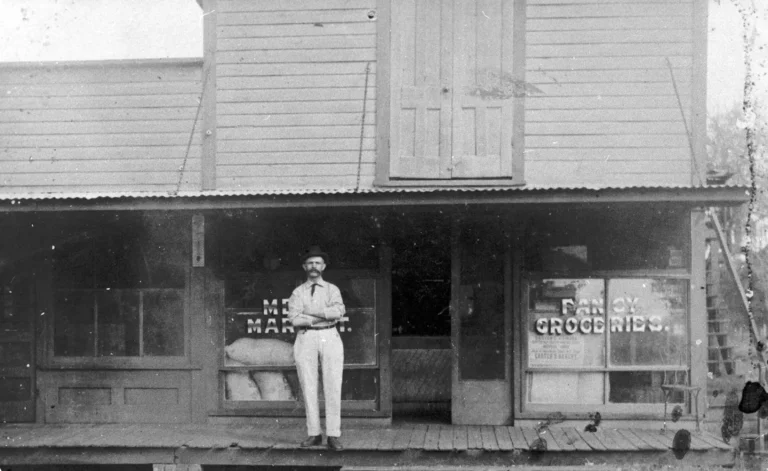
Parrish, Florida meat market grocery store
"Mr. Steven W. Ethridge posing outside of the Ethridge Meat Market and Grocery Store in Parrish." His grandfather, Steven W. Ethridge (not pictured) and the meat cutter were from Germany."
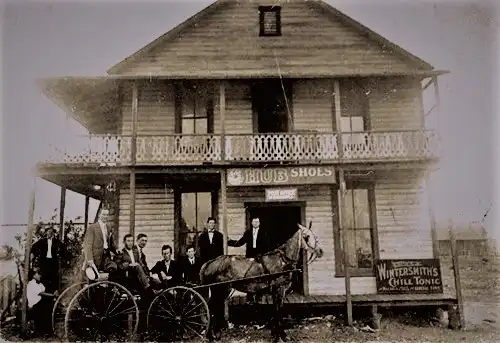
The first post office in Parrish, Florida
"Mr. Jim Lundy, who served as the first postmaster for Parrish."

The Post Office was Established

A post office was established in 1879. When the paperwork was sent to Washington, the name was misspelled. It was registered as Parish. The post office was moved several times through the years but when the new post office was built around 1950, the Postmaster reviewed the registration papers and found the error, it was corrected to the correct spelling of Parrish.

Parrish Today

Parrish, located in northeastern Manatee County, is one of the fastest-growing areas along Florida’s Gulf Coast. Once a quiet rural community of farms and open fields, Parrish is now evolving into a vibrant and welcoming place for families, retirees, and new businesses. This growth is shaped by convenience, strong housing demand, and the ongoing expansion of community services and amenities.

Parrish offers the best of both worlds—easy access to nearby cities while maintaining small-town charm. Residents enjoy:

  • A manageable commute to Tampa, St. Petersburg, Lakewood Ranch, and Sarasota
  • Good local schools, with additional schools opening to support growth
  • Close proximity to Gulf Coast beaches, parks, and outdoor recreation
  • A variety of new neighborhoods and master-planned communities
  • Expanding healthcare access, including a new hospital and emergency care centers

The State College of Florida – Parrish Campus provides educational and career opportunities right here in the community. As Parrish continues to grow, residents and local organizations are working to maintain the area’s welcoming character, natural beauty, and high quality of life through thoughtful planning.

Scroll to Top